Shri Sukta and the Lakshmi–Kuber havan: inviting Maa Lakshmi home
श्री सूक्त और लक्ष्मी-कुबेर हवन: माँ लक्ष्मी का आवाहन
The Vedic hymn to Maa Lakshmi, Kuber the treasurer of the gods, Adi Shankaracharya's Kanakdhara story, the kamalgatta havan, and why Dhanteras, Diwali and Fridays are chosen.
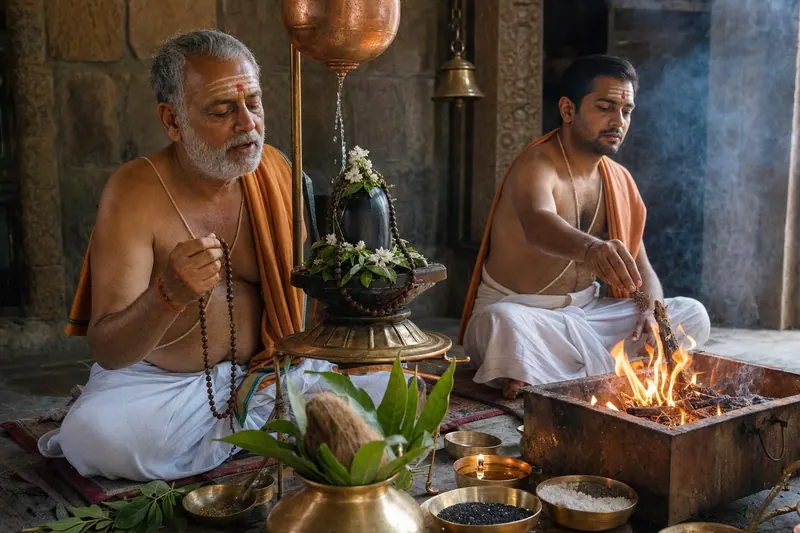
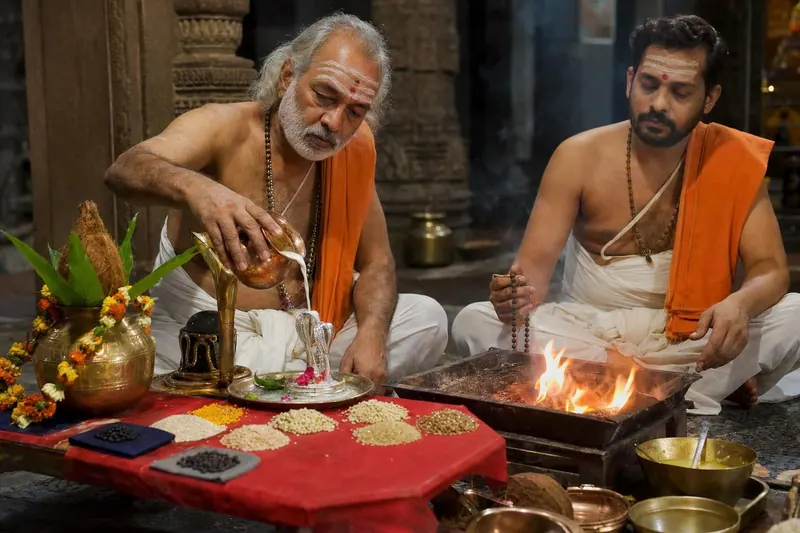
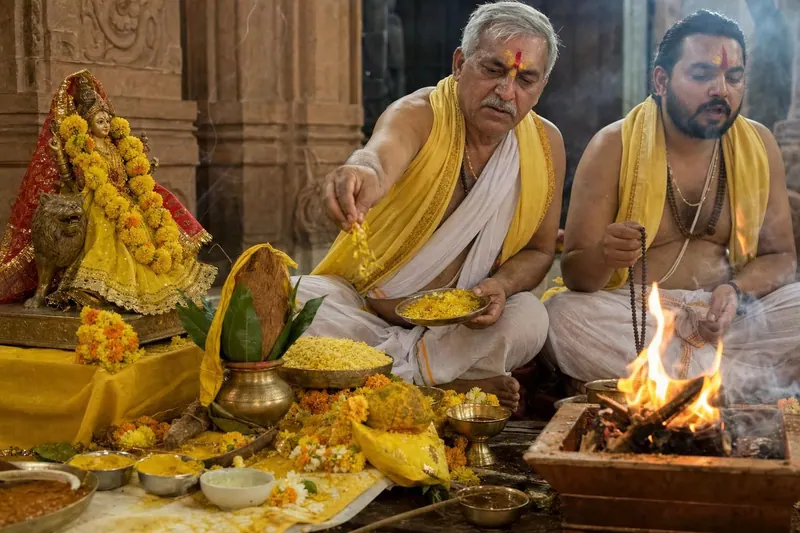
 Representational image
Money that comes but does not stay, a loan that weighs on the family, a shop that has gone quiet: every household understands these worries. In such times, and every year on Dhanteras and Diwali, families invite Maa Lakshmi home with the Shri Sukta (श्री सूक्त) and pray to Kuber, the treasurer of the gods, for steady prosperity. That is why “शुभ लाभ” is written at so many shop doors: gain, but auspicious gain.
The Shri Sukta
The Shri Sukta is a hymn to Maa Lakshmi from the khila, the appendix, of the Rig Veda. Its verses call on her as golden, radiant like the moon, seated on a lotus and fragrant with it. They ask Agni, Jataveda, to bring her to the home and keep her there, and ask that Alakshmi, want and misfortune, leave.
ॐ हिरण्यवर्णां हरिणीं सुवर्णरजतस्रजाम्। चन्द्रां हिरण्मयीं लक्ष्मीं जातवेदो म आवह॥
O Jataveda, bring to me Lakshmi, golden-hued and graceful as a doe, wearing garlands of gold and silver, radiant as the moon, made of gold.
— Shri Sukta, verse 1 (Rig Veda Khila)
Kuber, the treasurer
Kuber is the lord of the yakshas, the guardian of the north and the keeper of the treasures of the gods. Tradition tells that he once lent wealth to Lord Venkateshwara for his wedding to Padmavati. He is worshipped with Maa Lakshmi on Dhanteras, so that wealth comes and is also kept safe.
The Kanakdhara story
A well-loved story tells that young Shankara, later Adi Shankaracharya, once stopped at a poor woman's door for bhiksha. She had nothing but a single amla, and she gave it to him with love. Moved by her generosity, he sang a hymn to Maa Lakshmi, and the Mother, it is said, showered golden amlas on her home. That hymn is the Kanakdhara Stotram, the stream of gold, recited with the Shri Sukta to this day.
The vidhi of the havan
- Ganesh, Lakshmi and Kuber pujan, and the sankalp for the home, or for a shop or firm
- Recitation of the Shri Sukta, once or many times; 21 paths in a larger puja
- The Kanakdhara Stotram
- Havan of kamalgatta (lotus seeds) and kheer, with a verse of the Shri Sukta for each ahuti
- For a family weighed down by debt, the Rinmochan Mangal Stotram
- Aarti, and prasad shared with the family
Shubh din and offerings
Dhanteras and Diwali are the great days of the year: Friday, 6 November and Sunday, 8 November in 2026. Fridays, Purnima and Akshaya Tritiya are also traditional. Families usually offer lotus flowers, kamalgatta, kheer, white and yellow sweets and a few coins, and many light a ghee diya at the door in the evening to welcome the Mother.
Based on traditional texts and popular belief; tellings differ from region to region. A puja or seva is a prayer made with faith and cannot promise a result.