Kaal Sarp dosh: what it means and how its shanti puja is done
काल सर्प दोष: अर्थ और शांति पूजा की विधि
What astrologers mean by Kaal Sarp dosh, the story of Rahu and Ketu, why the naag is worshipped, the vidhi of the shanti puja and the days chosen for it.
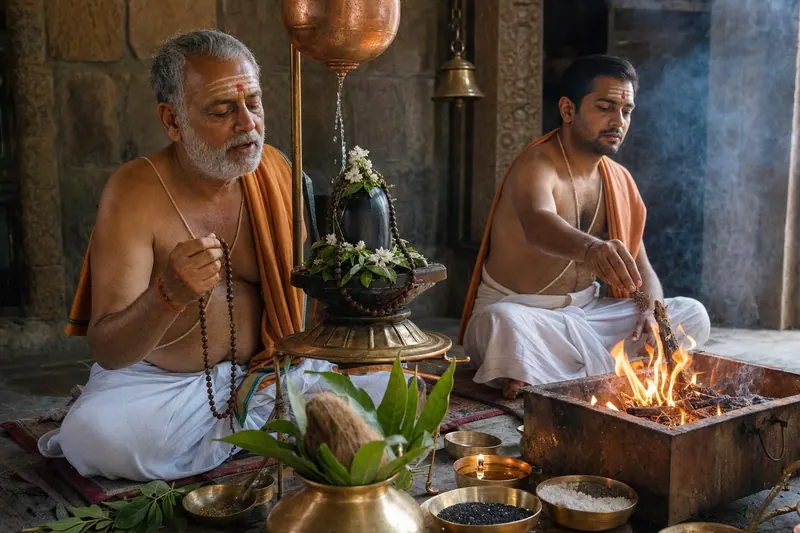
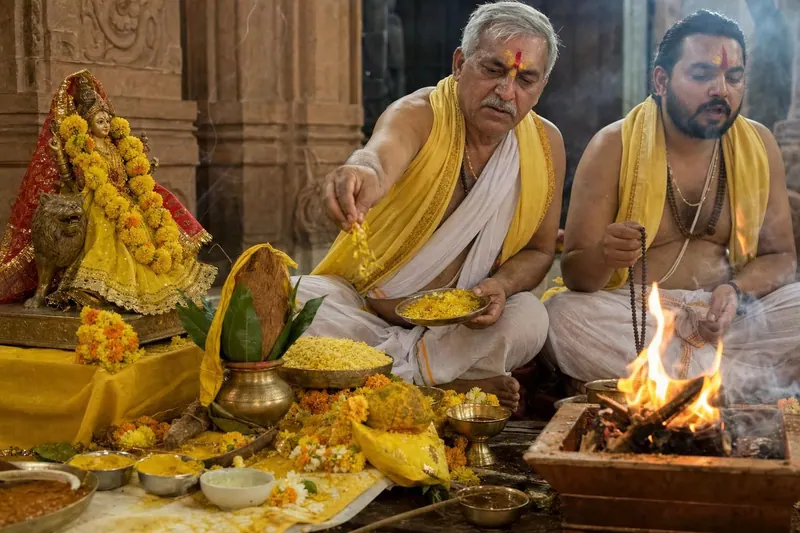
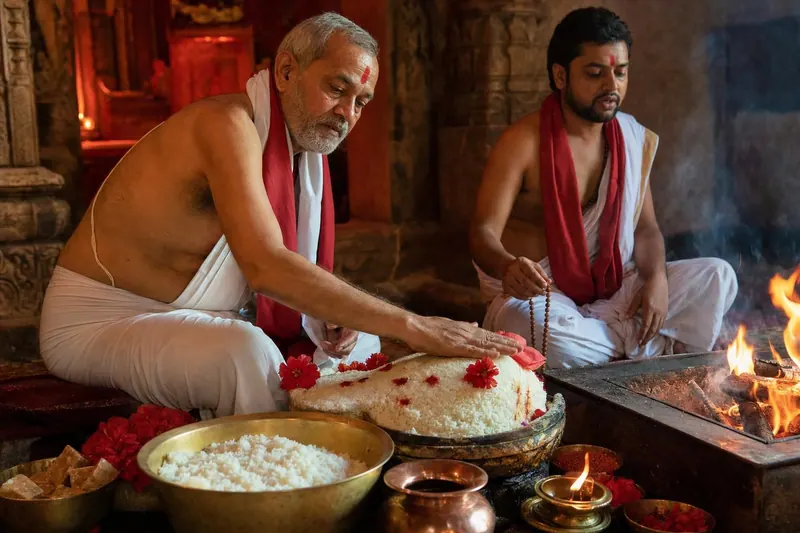
 Representational image
Some families find that, despite honest effort, things keep getting stuck: a job that does not come through, a business that does not settle, a rishta that does not move forward. मेहनत पूरी, फिर भी काम अटका. When a kundli is read in such times, the pandit sometimes speaks of Kaal Sarp dosh (काल सर्प दोष) and suggests a shanti puja to Rahu, Ketu and Lord Shiva. It is done with faith and hope, never out of fear.
What Kaal Sarp dosh means
In Vedic astrology Rahu and Ketu are the two shadow grahas, always exactly opposite each other in the kundli. When all seven other grahas, from the Sun to Saturn, fall on one side between them, the chart is said to have Kaal Sarp yog or dosh, as if held within the coils of a serpent (sarp) of time (kaal). The idea comes from later astrological tradition rather than the oldest texts, and astrologers' views on it differ, which is why a pandit reads the whole kundli before confirming it.
The story of Rahu and Ketu
When the devtas and asuras churned the ocean and the amrit rose, Lord Vishnu, as Mohini, served it to the devtas. The asura Swarbhanu disguised himself and sat among them, between the Sun and the Moon, and drank the nectar. The Sun and the Moon recognised him, and Vishnu's Sudarshan chakra cut him in two; but because the amrit had touched him, both parts lived on, the head as Rahu and the body as Ketu. The Bhagavata Purana tells this story, and tradition says that is why Rahu and Ketu chase the Sun and the Moon at eclipses.
अर्धकायं महावीर्यं चन्द्रादित्यविमर्दनम्। सिंहिकागर्भसम्भूतं तं राहुं प्रणमाम्यहम्॥
I bow to Rahu, the half-bodied one of great valour, who eclipses the Moon and the Sun, born of Simhika.
— Navagraha Stotram, attributed to Maharishi Vyasa
Why the naag is worshipped
Serpents are honoured throughout Indian tradition: Sheshnaag bears Lord Vishnu, and Vasuki, the rope of the churning, coils around Lord Shiva's neck. In the shanti puja a pair of naag and nagin made of copper or silver is worshipped and then offered into flowing water, a prayer that the knots in one's path may open. The Vedic sarp sukta, with its salutations to the serpents of the earth, the sky and the heavens, is recited.
नमोऽस्तु सर्पेभ्यो ये के च पृथिवीमनु। ये अन्तरिक्षे ये दिवि तेभ्यः सर्पेभ्यो नमः॥
Salutations to the serpents, whichever move upon the earth, those in the sky and those in the heavens: to those serpents, salutations.
— Shukla Yajurveda 13.6
The vidhi
- Ganesh and Navgrah pujan, and the sankalp with the name, gotra and birth details
- Rahu and Ketu pujan, with their mantras
- Pujan of the naag-nagin pair with milk, flowers and rice
- Sarp sukta path and havan
- Rudrabhishek of the Shivling
- Visarjan: the pair is offered into flowing water
Trimbakeshwar near Nashik and Ujjain are the places where this puja is best known, and many families travel there for it. The vidhi is the same wherever learned pandits perform it.
Shubh din and offerings
Nag Panchami in Shravan is the most popular day of the year for this puja. Amavasya, Mondays and the days of Rahu's nakshatras, Ardra, Swati and Shatabhisha, are also chosen. Families offer milk for the abhishek, white flowers and bel patra for Shiv ji, and black til and urad, which are traditional in Rahu–Ketu shanti.
Based on traditional texts and popular belief; tellings differ from region to region. A puja or seva is a prayer made with faith and cannot promise a result.