Navgrah shanti: praying to the nine grahas
नवग्रह शांति: नौ ग्रहों की पूजा
Who the nine grahas are, why families seek their shanti, the traditional days and jaap counts of each, the vidhi of a Navgrah puja and when it is done.
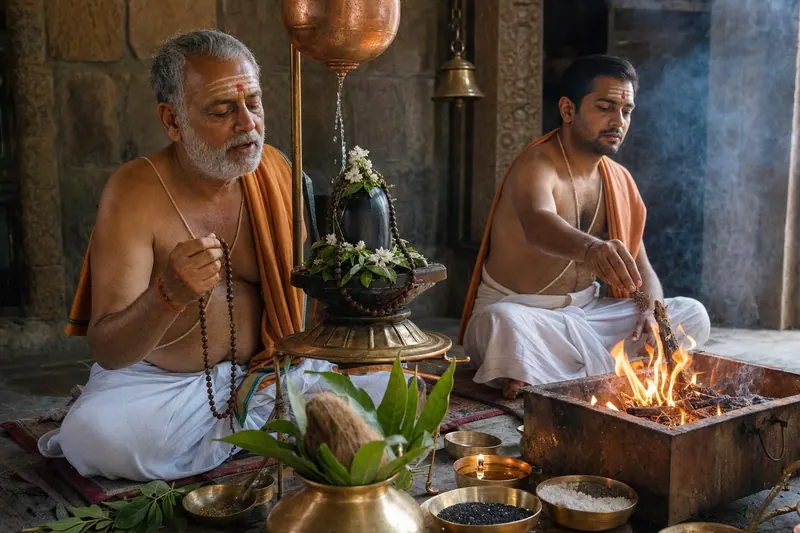
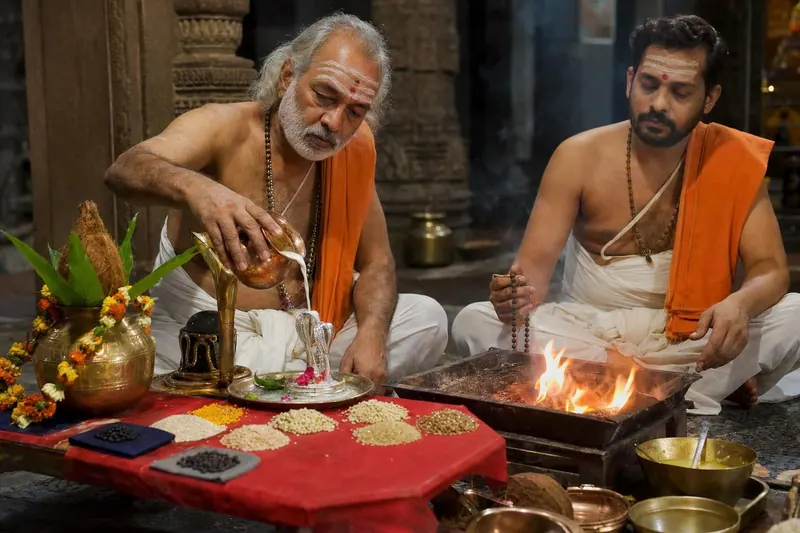
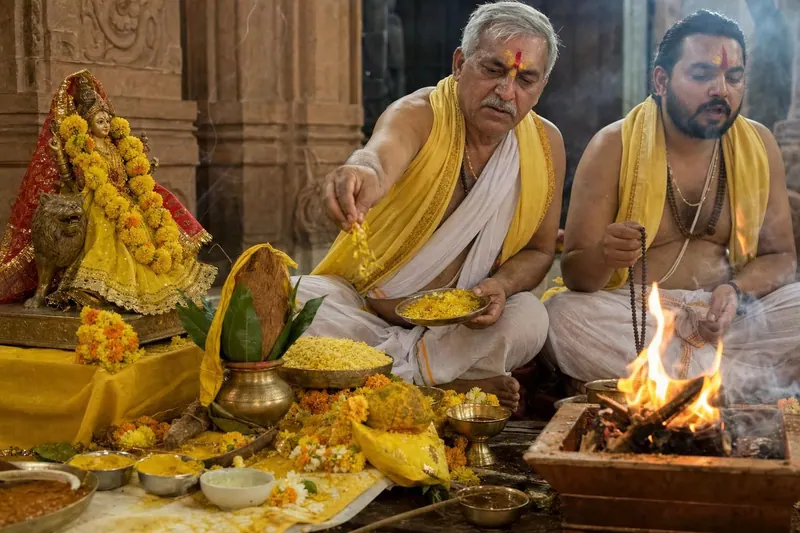
 Representational image
In the Vedic view, nine grahas shape the rhythms of life: Surya, Chandra, Mangal, Budh, Brihaspati, Shukra, Shani, Rahu and Ketu. When a kundli shows one of them weak or troubled, or before a big step such as a wedding, a griha pravesh or a new venture, families seek Navgrah shanti (नवग्रह शांति), a puja to keep all nine in harmony. सब ग्रह अनुकूल रहें, may every graha be favourable, is the prayer.
Grahas, not just planets
Graha means one who seizes or influences. The nine include the Sun and the Moon, and Rahu and Ketu, the two shadow points where the paths of the Sun and the Moon cross, which is why they are called grahas rather than planets. The Navagraha Stotram, attributed to Maharishi Vyasa, gives each of them a verse of praise, and in many temples the nine are installed together, each facing a different direction, so that devotees can walk around all of them.
ब्रह्मा मुरारिस्त्रिपुरान्तकारी भानुः शशी भूमिसुतो बुधश्च। गुरुश्च शुक्रः शनिराहुकेतवः कुर्वन्तु सर्वे मम सुप्रभातम्॥
May Brahma, Murari and the destroyer of Tripura, the Sun, the Moon, the son of the earth and Budh, Guru, Shukra, Shani, Rahu and Ketu, all make my morning auspicious.
— Vamana Purana, the morning prayer (Suprabhatam)
The nine, their days and their counts
Each graha has its own day, and tradition gives each a count of jaap for a full shanti anushthan:
- Surya, the Sun · Sunday · 7,000
- Chandra, the Moon · Monday · 11,000
- Mangal · Tuesday · 10,000
- Budh · Wednesday · 9,000
- Brihaspati (Guru) · Thursday · 19,000
- Shukra · Friday · 16,000
- Shani · Saturday · 23,000
- Rahu · 18,000
- Ketu · 17,000
Each also has its own grain, colour and flowers in the puja: wheat and red flowers for Surya, rice and white for Chandra, black til for Shani, and so on, though the details vary from region to region.
The vidhi
- Ganesh pujan, and the sankalp with the name, gotra and birth details
- Kalash sthapana and the Navgrah mandal, with each graha's grain and colour in its place
- Pujan of each graha with its mantra, from the Vedic mantras or the Navagraha Stotram
- Jaap for the graha the pandit finds weak in the kundli
- Havan with the samidha of each graha's tree, such as ark for Surya and shami for Shani, and the purnahuti
- Daan of each graha's things, and aarti
When it is done
Navgrah shanti can be done on any auspicious day chosen from the panchang. Many families do it before a wedding, a griha pravesh or a new business, or on a birthday; for a single graha, its own weekday is chosen. It is also part of larger pujas, such as the Kaal Sarp shanti.
Based on traditional texts and popular belief; tellings differ from region to region. A puja or seva is a prayer made with faith and cannot promise a result.