Shiv–Parvati pujan: the blessing of a lifelong marriage
शिव–पार्वती पूजन और अखंड सौभाग्य
Why married couples seek Maa Gauri's blessing, the story of Parvati's penance, Sita ji's prayer to Gauri, the meaning of suhag shringar, and what a pujan in both names involves.
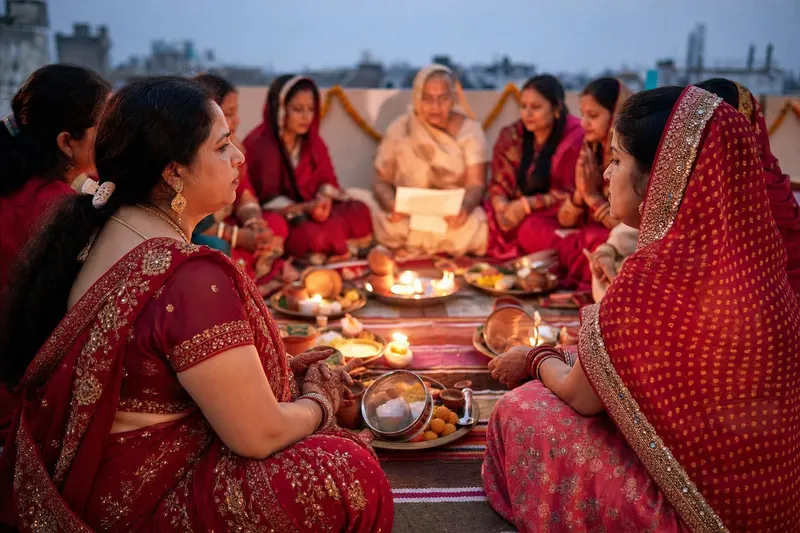
 Representational image
Whenever a married couple prays for a long, loving life together, they turn to Shiv–Parvati (शिव–पार्वती). On Karwa Chauth, Hartalika Teej, Gangaur and the Mangala Gauri vrat of Shravan, women worship Maa Gauri for akhand saubhagya (अखंड सौभाग्य), an unbroken married life, and couples seek the blessing of the divine pair together.
The penance of Parvati
Maa Parvati, daughter of the king of the mountains, set her heart on Lord Shiva, the ascetic of Kailash. Tradition tells of years of penance in which she lived on fruit, then on leaves, and finally gave up even leaves, which is why she is called Aparna (अपर्णा). When Shiva came to her in disguise and spoke ill of himself to test her, she would not hear a word against him. Moved by her devotion, he revealed himself and accepted her.
Their marriage is the ideal of a union of equals: as Ardhanarishvara, Shiva is half Parvati, and neither is complete without the other. Kalidasa opens his Raghuvamsham by bowing to them as the parents of the world.
वागर्थाविव सम्पृक्तौ वागर्थप्रतिपत्तये। जगतः पितरौ वन्दे पार्वतीपरमेश्वरौ॥
For the gift of word and meaning, I bow to Parvati and Parameshvara, the parents of the world, joined as a word is joined to its meaning.
— Kalidasa, Raghuvamsham 1.1
Sita ji's prayer to Gauri
In the Ramcharitmanas, Sita ji goes to the temple of Gauri in Janakpur before her swayamvar and prays for the husband her heart has chosen. Moved by her love and humility, Bhavani lets her garland slip down as a blessing and tells her that the one her heart is set on will be hers. Brides and wives have prayed to Gauri in Sita's words ever since.
जय जय गिरिबरराज किसोरी। जय महेस मुख चंद चकोरी॥
Glory, glory to the daughter of the king of mountains; glory to you, who gaze at Shiva's face as the chakor bird gazes at the moon.
— Ramcharitmanas, Bal Kand
What suhag shringar means
On Karwa Chauth women offer Maa Gauri the marks of a married woman, and wear them themselves as her blessing:
- Sindoor in the parting, and a bindi on the forehead
- Red and green bangles, and mehndi on the hands
- A red chunri, the colour of auspicious beginnings
- Toe rings and a mangalsutra, in many communities
What a pujan in both names involves
In a pujan for a couple, the pandit ji takes a sankalp naming the wife and the husband, with their gotra, states the occasion and the wish, and performs Shiv–Parvati pujan in their names. Suhag shringar may be offered to Maa Parvati, and the pujan ends with a prayer for love, health and a long life together. It is offered alongside the couple's own vrat and puja, never in place of them.
A few things to keep in mind
- Give the names as the couple uses them, in English or Hindi; the sankalp is read exactly as given.
- A pujan for parents on their anniversary, or for a newly married couple's first Karwa Chauth, is a thoughtful gift.
- Keep your own vrat and puja at home as your family does; the pujan joins them.
Based on traditional texts and popular belief; tellings differ from region to region. A puja or seva is a prayer made with faith and cannot promise a result.