Karwa Chauth 2026: date, katha and puja vidhi
करवा चौथ 2026: तिथि, कथा और पूजा विधि
Thursday, 29 October. Why married women keep the nirjala vrat, the katha of Queen Veeravati, and how the day is kept from sargi to moonrise.
 Representational image
Karwa Chauth is one of the most loved vrats of North India. Married women keep a nirjala fast, without food or water, from sunrise until the moon rises, praying for their husbands' long life, health and happiness: the blessing of akhand saubhagya (अखंड सौभाग्य). The karwa, the small spouted pot used in the puja, gives the day its name, and chauth means the fourth day.
When is Karwa Chauth in 2026?
Karwa Chauth falls on Thursday, 29 October 2026. It is the Chaturthi of the waning moon in Kartik by the purnimanta calendar of North India (in the amanta calendar of western and southern India the same day falls in Ashwin). In New Delhi the Chaturthi tithi runs from just after 1 AM on 29 October to about 10:10 PM that night, and the moon is expected to rise at about 8:15 PM. Moonrise differs from city to city, so check your own city's time before breaking the fast.
Why it is celebrated
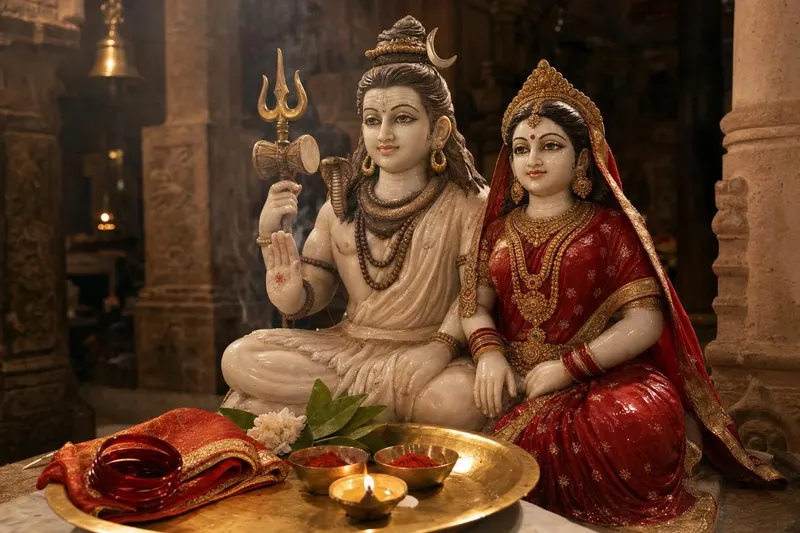
The vrat is kept for a husband's long life and for a marriage that stays happy and whole. In the evening women worship Maa Gauri (Parvati) with Lord Shiva, Ganesh ji, Kartikeya and Chauth Mata. Maa Parvati won Lord Shiva through long penance, and their union is the ideal of a devoted, lifelong marriage, so it is her blessing that women seek on this day.
The katha of Queen Veeravati
Veeravati was the only sister of seven loving brothers. On her first Karwa Chauth after marriage she kept the fast at her parents' home, and by evening she was faint with hunger and thirst. Unable to see her suffer, her brothers lit a fire behind a tree and held up a sieve, so that it looked like the rising moon. Veeravati broke her fast, and soon the news came that her husband had died.
Heartbroken, she prayed to Maa Parvati, who told her that the fast had been broken before the true moon rose. With deep devotion Veeravati kept the vrat again exactly as prescribed, and by the Mother's grace her husband's life was restored. That is why the fast is broken only after seeing the moon. Another katha tells of a wife named Karwa, who bound a crocodile that had seized her husband with a cotton thread and called on Yamraj until he spared her husband's life.
नमः शिवायै शर्वाण्यै सौभाग्यं संततिं शुभाम्। प्रयच्छ भक्तियुक्तानां नारीणां हरवल्लभे॥
O beloved of Hara, grant good fortune and blessed children to the women who worship you with devotion.
— Traditional Karwa Chauth prayer to Maa Gauri
How the day is kept
- Sargi (सरगी) before sunrise: fruit, sweets and dry fruit, traditionally sent by the mother-in-law and eaten before dawn. The vrat begins after it.
- The nirjala vrat: no food or water through the day, with the Mother's name in the heart.
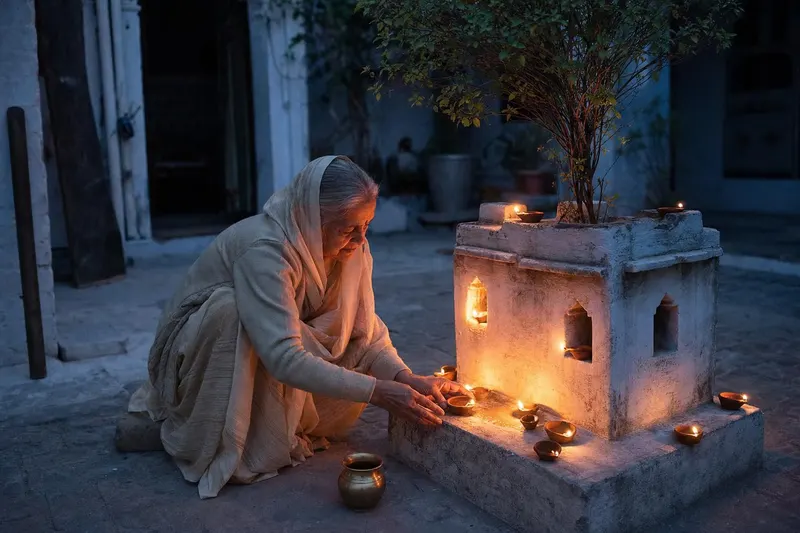
- Evening puja: Maa Gauri or Chauth Mata is worshipped with Shiv ji, Ganesh ji and Kartikeya, a karwa filled with water is set beside them, and the katha is heard together.
- Baya: a thali of sweets, fruit and a gift is offered to the mother-in-law or an elder woman, and her blessings are taken.
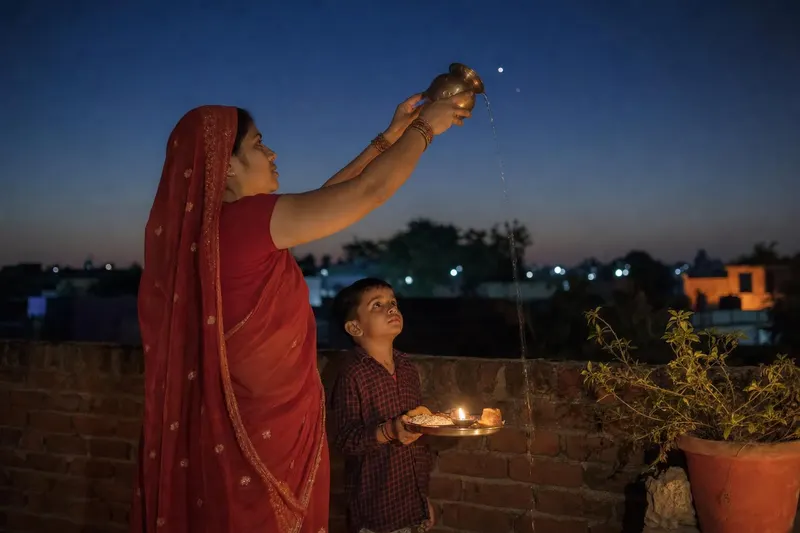
- Moonrise: the moon is seen through a sieve (छलनी) with a diya on it and offered arghya from the karwa; then the husband's face is seen through the sieve.
- Breaking the fast: the husband gives the first sip of water and the first bite, and the vrat is complete.
What to offer
- A karwa filled with water for the arghya, covered with its lid
- Roli, rice, a ghee diya, flowers, and sweets such as mathri or halwa
- Suhag shringar for Maa Gauri: a red chunri, bindi, sindoor, bangles and mehndi
- Water with a little raw milk and rice for the arghya to the moon
Dos and don'ts
- Break the fast only after you have seen the moon and offered arghya.
- Follow your family's way: in some families the fast is kept with water, or with fruit after the evening puja.
- If you are pregnant, unwell or on medicines, talk to your elders and your doctor before keeping a nirjala fast.
- Avoid quarrels and harsh words, and keep the day calm and devotional.
- Many families avoid sewing and cutting with scissors on this day; follow what your elders practise.
Based on traditional texts and popular belief; tellings differ from region to region. A puja or seva is a prayer made with faith and cannot promise a result.