Ahoi Ashtami 2026: a mother's vrat for her children
अहोई अष्टमी 2026
Sunday, 1 November. Why mothers fast till the stars come out, the katha of the syahu's cubs, and how Ahoi Mata is worshipped.
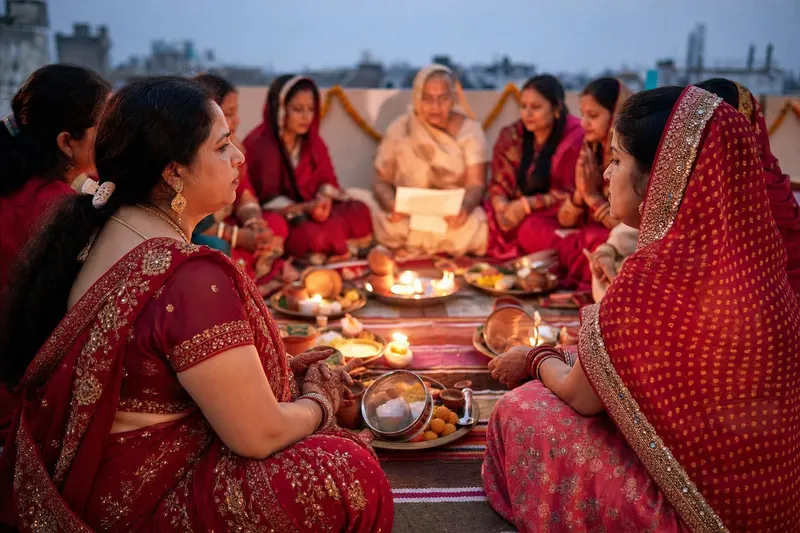
 Representational image
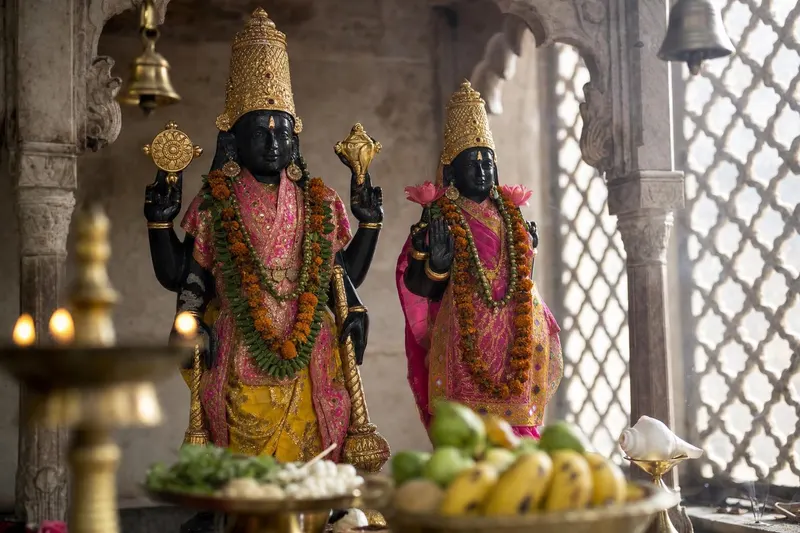
Four days after Karwa Chauth comes Ahoi Ashtami (अहोई अष्टमी), when mothers keep a day-long fast for the long life, health and happiness of their children. The vrat ends in the evening, when the first stars appear and the mother offers them arghya. Ahoi Mata, worshipped on this day, is revered as a form of Maa Parvati, the Mother who protects every child.
When is Ahoi Ashtami in 2026?
Ahoi Ashtami falls on Sunday, 1 November 2026, the Ashtami of the waning moon in Kartik. In New Delhi the Ashtami tithi begins at about 2:52 PM on 1 November and lasts until about 1:11 PM on 2 November, so the evening puja and the star-gazing that ends the fast fall on 1 November. Some families wait for the moon instead, which rises late on this night, close to midnight in New Delhi this year.
The katha
A well-known katha tells of a mother of seven sons who went to the forest before Diwali to dig soil to plaster her home. As she dug, her spade struck and killed the cub of a syahu (स्याहु), a porcupine, hidden in its burrow. She went home full of sorrow for what she had done, and in the year that followed her seven sons died one by one.
When she told the village women her story, an elderly woman advised her to pray to Ahoi Bhagwati on the Ashtami of Kartik, drawing the syahu and its cubs beside the Mother and asking forgiveness. She kept the vrat with a pure heart year after year, and by the Mother's grace her sons were restored to her. Since then mothers keep Ahoi Ashtami for their children, and the syahu and its cubs are drawn beside Ahoi Mata.
या देवी सर्वभूतेषु मातृरूपेण संस्थिता। नमस्तस्यै नमस्तस्यै नमस्तस्यै नमो नमः॥
To the Devi who dwells in all beings in the form of the Mother, salutations again and again.
— Durga Saptashati, chapter 5
How the day is kept
- A fast from sunrise, usually without food; many mothers also go without water until the evening.
- Ahoi Mata is drawn on the wall in geru (गेरू, red ochre), or a printed picture is put up, showing the Mother with the syahu and its cubs and, in many homes, the seven sons.
- In the evening a karwa filled with water is set beside her, in many families the same karwa used on Karwa Chauth, and the katha is read with the children sitting close.
- Bhog of puri, halwa or sweet puas and chana is offered, and the Mother is asked to protect the children.
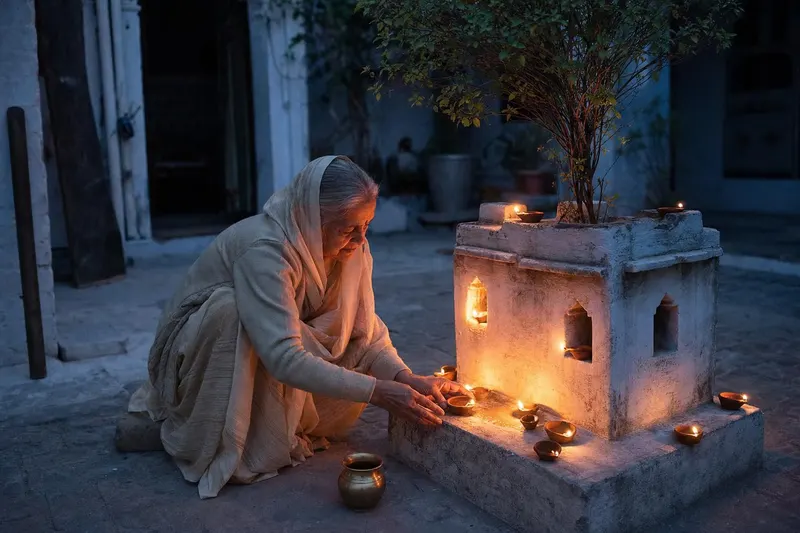
- When the stars appear, arghya is offered to them from the karwa, and the fast is broken.
- In some families a silver Ahoi pendant with a syahu is strung on a thread and worn, and a bead is added for each child.
What to offer
- A karwa filled with water for the arghya
- Roli, rice, a ghee diya, flowers and a little milk
- Puri, halwa or sweet puas, and boiled chana
- For the mother-in-law or an elder woman: sweets, a little money or a saree, given with respect after the puja
Dos and don'ts
- Remembering the katha, many mothers avoid digging soil and cutting greens on this day.
- Keep the children close at the evening puja; the vrat is for them.
- If you are unwell or pregnant, keep a lighter fast with fruit and water, as your elders and doctor advise.
- In Braj, couples praying for a child bathe in Radha Kund, near Govardhan, at midnight on this night.
Based on traditional texts and popular belief; tellings differ from region to region. A puja or seva is a prayer made with faith and cannot promise a result.