Kanya Pujan: why young girls are honoured as the Devi
कन्या पूजन (कंजक) क्यों करते हैं
The meaning of Kanjak in Navratri, the forms of the Devi by a girl's age, the story of Pandit Shridhar and Maa Vaishno Devi, and the vidhi step by step.
 Representational image
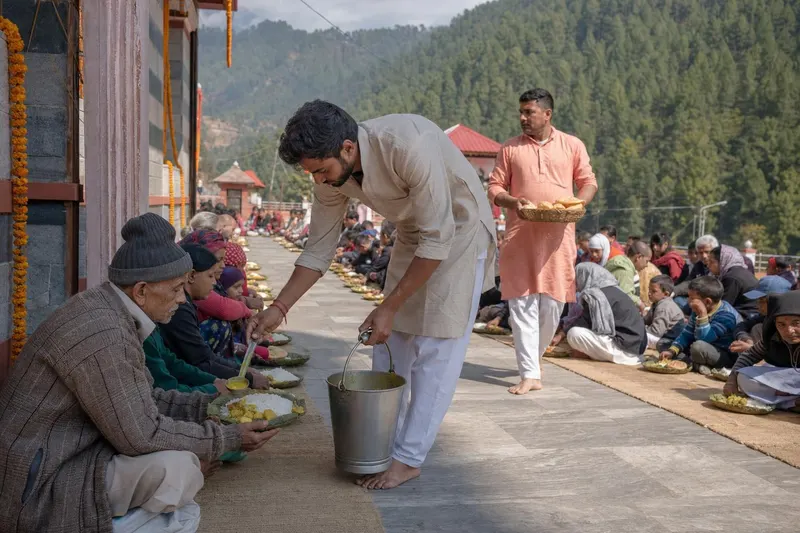
On Ashtami or Navami of Navratri, homes across North India open their doors to young girls. Their feet are washed, they are seated with respect, a tilak is applied, and they are served puri, chana and halwa. This is Kanya Pujan, lovingly called Kanjak (कंजक), and many families feel their Navratri is incomplete without it. कहते हैं, कन्या पूजन के बिना नवरात्रि अधूरी है।
The Devi in a young girl
The Devi Bhagavata Purana describes Kumari Pujan in detail: during Navratri, girls from two to ten years old are worshipped as living forms of the Devi, and it is believed that Maa Durga herself comes as a kanya to accept the meal. The Durga Saptashati gives the reason in a single line: every woman in the world is a form of the Devi.
विद्याः समस्तास्तव देवि भेदाः स्त्रियः समस्ताः सकला जगत्सु।
O Devi, all forms of knowledge are aspects of you, and all women in the world are your forms.
— Durga Saptashati, chapter 11
The Purana even names the Devi's form for each age: Kumari at two, Trimurti at three, Kalyani at four, Rohini at five, Kalika at six, Chandika at seven, Shambhavi at eight, Durga at nine and Subhadra at ten. In North Indian homes a young boy is often seated with the girls as the Langur (लांगुर), a form of Bhairav or Hanuman ji, because the Mother's worship is thought incomplete without her guardian.
Pandit Shridhar's Kanya Pujan
Kanjak has a special place in the Vaishno Devi area. The shrine's legend tells that in Hansali village near Katra lived Pandit Shridhar, a poor but devoted bhakt of the Mother. One Navratri, as he performed Kanya Pujan, Maa Vaishno Devi joined the girls in the form of a divine young girl. When the others had left, she asked him to invite the whole village to a bhandara, and by her grace everyone was fed in plenty. When Bhairavnath came to test her, she left for the Trikuta hills, where her holy cave stands today.
The vidhi, step by step
- Invite the girls respectfully a day before, usually nine of them, with one boy as the Langur.
- When they arrive, wash their feet with love and seat them on a clean mat.
- Apply a tilak of roli and rice, tie a kalawa on each wrist, and offer a chunri if you wish.
- Serve the bhog of puri, kala chana and suji halwa, fresh and hot.
- After the meal, give dakshina or a small gift, as you are able.
- Touch their feet, take their blessings, and see them off with respect.
Dos and don'ts
- Treat the girls as honoured guests: never press them to eat more or to stay longer than they want.
- Keep the food fresh, simple and clean, and ask parents about any allergies of very young children.
- Invite girls from every background; the Devi is in every girl.
- If you cannot gather nine, honour as many as you can with the same love.
Based on traditional texts and popular belief; tellings differ from region to region. A puja or seva is a prayer made with faith and cannot promise a result.