Gau Seva: why we serve Gau Mata
गौ सेवा का महत्व
Why the cow is honoured as a mother, Kamadhenu and Shri Krishna as Gopal, King Dilip's service to Nandini, and how to feed cows the right way.
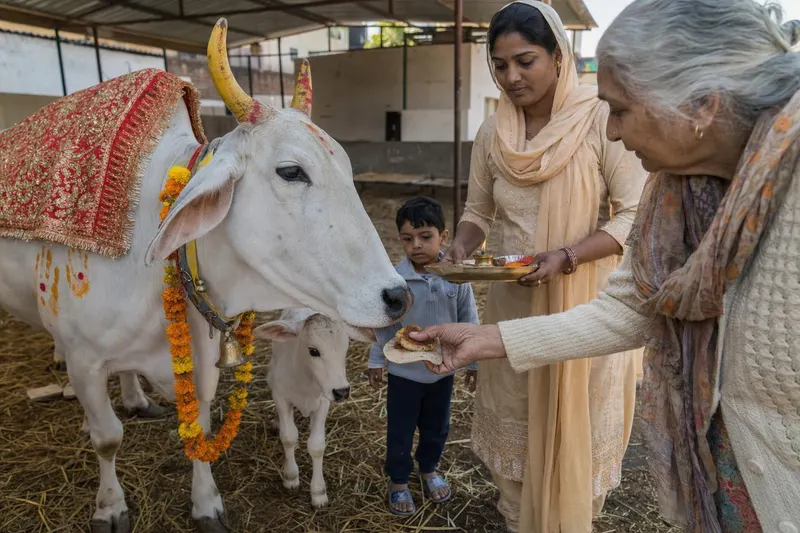
 Representational image
In many Indian homes the first roti of the day is set aside for the cow, the gau graas (गौ ग्रास). It is a small habit with a large meaning: the cow is honoured as Gau Mata (गौमाता), a mother who nourishes, and serving her is seen as one of the simplest and most complete forms of seva.
Mother of the world
Like a mother, the cow nourishes with her milk, and from her come the milk, curd and ghee of every yagna and every prasad. The Mahabharata calls cows the mothers of the world, and a popular belief holds that all the gods dwell in her body, which is why serving one cow is seen as worshipping them all.
गावो विश्वस्य मातरः।
Cows are the mothers of the world.
— Mahabharata
Kamadhenu and Gopal
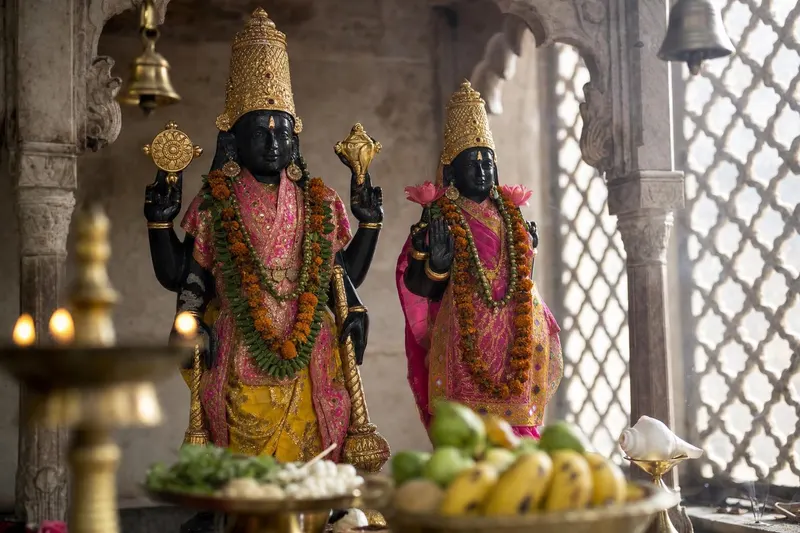
When the gods and asuras churned the ocean of milk, among the treasures that rose was Kamadhenu, the wish-fulfilling cow, and every cow is seen as her form. Shri Krishna spent his childhood tending cows in Gokul and Vrindavan, and is lovingly called Gopal and Govinda. He lifted Govardhan to shelter Braj and its cows, and Gopashtami remembers the day he first led the herd out to graze.
King Dilip and Nandini
Kalidasa's Raghuvamsham tells of King Dilip, an ancestor of Shri Ram, who had no son. On his guru Vashishtha's advice, he and Queen Sudakshina served Nandini, the daughter of Kamadhenu, following her through the forest day after day. When a lion seized Nandini, Dilip offered his own body in her place. The lion vanished, for it had been a test, and Nandini blessed the king. His son Raghu gave his name to the dynasty of Shri Ram.
Days for gau seva
- Every day: the first roti for the cow
- Ekadashi, Amavasya and Purnima
- Gopashtami, the festival of Gau Mata
- Birthdays, anniversaries and the remembrance days of ancestors
- Times of difficulty, when families seek the Lord's grace as their elders advise
How to feed cows the right way
- Give fresh green fodder (hara chara, हरा चारा), the cow's natural food, with gud and chokar (bran) in moderation.
- A plain roti is fine; avoid salty, spicy, oily or sugary leftovers.
- Never feed plastic, packaged food, or stale, mouldy or spoiled food; these can make cows seriously ill.
- Approach gently, and feed in a trough or on clean ground rather than from a plastic bag.
- Supporting a gaushala that cares for old and abandoned cows is gau seva too.
Based on traditional texts and popular belief; tellings differ from region to region. A puja or seva is a prayer made with faith and cannot promise a result.