Durga Saptashati and Chandi havan: the Mother's seven hundred verses
दुर्गा सप्तशती और चंडी हवन: माँ के सात सौ श्लोक
What the Durga Saptashati is, its three charitras of Mahakali, Mahalakshmi and Mahasaraswati, how the path is read in Navratri, the Chandi havan, and its link with Mata Vaishno Devi's three Pindis.
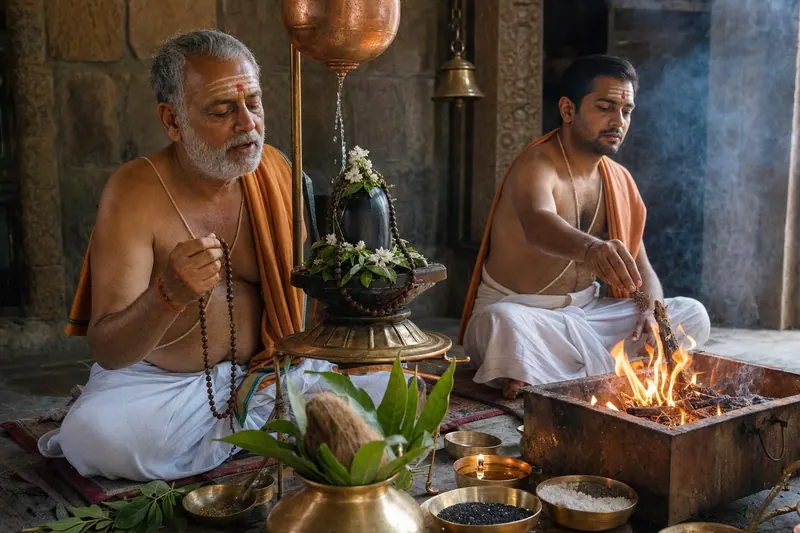
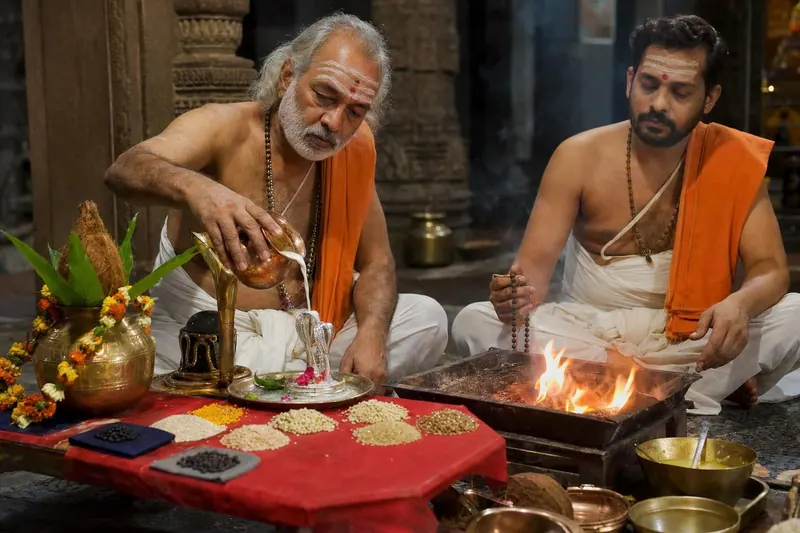
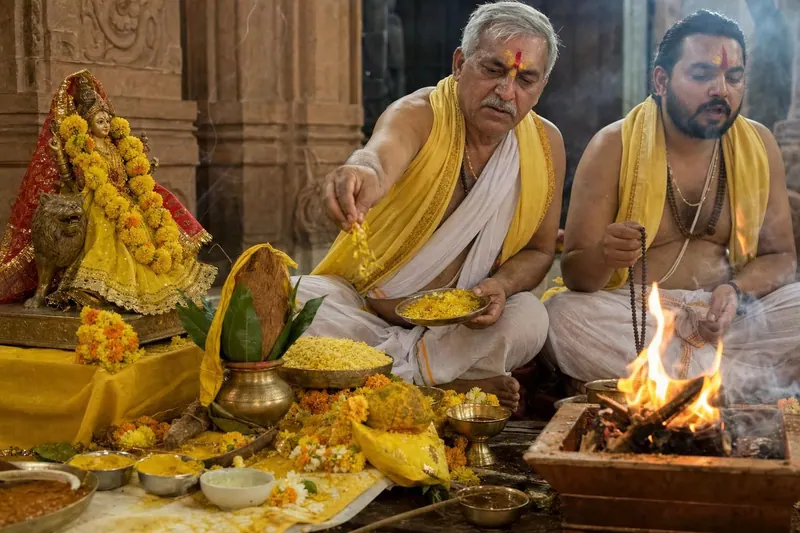
 Representational image
In Navratri, from homes and temples across India, the same verses rise each morning: the Durga Saptashati (दुर्गा सप्तशती), also called the Chandi Path or the Devi Mahatmya. Saptashati means seven hundred, for its seven hundred verses in praise of the Mother. In every devotee's Navratri, “जय माता दी” and the Saptashati go together.
What the Saptashati is
The Saptashati is part of the Markandeya Purana: thirteen chapters in which the sage Medha tells two seekers the glory of the Devi. One is King Suratha, who has lost his kingdom; the other is Samadhi, a merchant turned out by his own family. Both come to him in sorrow, and both leave with her blessing.
The three charitras
- Pratham charitra (chapter 1): Brahma prays to Mahakali, the Yoganidra of Lord Vishnu, to release him, and Vishnu awakens and slays Madhu and Kaitabh.
- Madhyam charitra (chapters 2–4): the Devi as Mahalakshmi, born of the radiance of all the gods, slays Mahishasura.
- Uttam charitra (chapters 5–13): as Mahasaraswati she slays Shumbha and Nishumbha, and the gods sing her praise.
Mahakali, Mahalakshmi and Mahasaraswati are the very forms in which Mata Vaishno Devi is worshipped, as the three Holy Pindis in her cave on the Trikuta hills. That is why the Saptashati is so close to the hearts of her devotees.
या देवी सर्वभूतेषु शक्तिरूपेण संस्थिता। नमस्तस्यै नमस्तस्यै नमस्तस्यै नमो नमः॥
To the Devi who dwells in all beings as power, salutations, salutations, salutations again and again.
— Durga Saptashati, chapter 5
How the path is read
- Before the path: the Devi Kavach, the Argala Stotram and the Kilak, the three angas
- Jaap of the Navarna mantra, “ॐ ऐं ह्रीं क्लीं चामुण्डायै विच्चे”
- The thirteen chapters, in one sitting or spread over the nine days of Navratri
- After the path: the Devi Suktam, the prayer of forgiveness and aarti
The Chandi havan
In a Chandi havan the verses of the Saptashati are offered as ahutis into the fire with ghee and havan samagri, so that the whole path becomes a yagna. It is usually done on Ashtami or Navami of Navratri, or to complete a vow, and in many families it ends with purnahuti and Kanya Pujan.
Shubh din
Chaitra and Sharad Navratri are the great seasons for the path; Chaitra Navratri falls in March or April. Ashtami and Navami of every month, and Fridays, are also chosen.
Reading at home
- If the whole path is too long, read one charitra a day, or the Kavach, Argala and Kilak with the Siddha Kunjika Stotram
- Read slowly and clearly, with a lamp lit and a red chunri offered to the Mother
- End with the kshama prarthana, asking forgiveness for any mistake
Based on traditional texts and popular belief; tellings differ from region to region. A puja or seva is a prayer made with faith and cannot promise a result.