Loading…
गावो विश्वस्य मातरः
Why do we do Gau Seva?
Why the cow is honoured as Gau Mata, the stories of Kamadhenu, Shri Krishna and King Dilip, the household custom of the first roti, and the days on which gau seva is considered most auspicious.
According to tradition
Gau Mata — mother of the world
In Indian tradition the cow is not just an animal but a mother. Like a mother she nourishes with her milk, and from her come the milk, curd and ghee of every yagna and every prasad. The Mahabharata calls cows the mothers of the whole world.
A popular verse says that all the gods dwell in the body of the cow — which is why serving a cow is seen as worshipping them all at once, and why so many families set aside the first roti of the day, the gau grass, for the cow.
गावो विश्वस्य मातरः।
— Mahabharata · “Cows are the mothers of the world.”
From the churning of the ocean
Kamadhenu, the wish-fulfilling cow
When the gods and asuras churned the ocean of milk, among the treasures that rose from it was Kamadhenu, also called Surabhi, the divine cow who fulfils every wish. She was given to the rishis, so that her milk and ghee could sustain the yagnas that keep the world in balance.
Every cow is seen as a form of Kamadhenu, which is why gau seva is believed to bring blessings of every kind to the family that offers it.
Shri Krishna in Braj
Gopal, Govinda — the cowherd Lord
Shri Krishna spent his childhood in Gokul and Vrindavan tending cows, which is why he is lovingly called Gopal, the protector of cows, and Govinda. When Indra's rains threatened Braj, he lifted the Govardhan hill to shelter its people and their cows — remembered every year on Govardhan Puja.
Gopashtami, the eighth day of the bright half of Kartik, is celebrated as the day young Krishna first took the cows out to graze. On this day cows are bathed, decorated, worshipped and fed. In 2026, Gopashtami falls on 17 November.
A story from the Raghuvansh
The king who offered himself for a cow
Kalidasa's Raghuvansham tells of King Dilip of the Ikshvaku line, an ancestor of Shri Ram, who had no son. On the advice of his guru Vashishtha, he and Queen Sudakshina served Nandini, the daughter of Kamadhenu, following her through the forest day after day.
One day a lion seized Nandini, and Dilip offered his own body in her place. The lion vanished — it had been a test — and Nandini blessed the king. He was soon blessed with a son, Raghu, after whom the dynasty of Shri Ram is named.
Auspicious days
Days for gau seva
Every day
Many households set aside the first roti of the day, the gau grass, for the cow.
Ekadashi
Papankusha Ekadashi (22 Oct), Rama Ekadashi (5 Nov) and Dev Uthani Ekadashi (20 Nov) in 2026.
Gopashtami
The festival of Gau Mata and of Shri Krishna as Gopal — 17 November 2026.
Amavasya and Pitru Paksha
Gau seva in the name of ancestors is a cherished tradition.
Birthdays and anniversaries
A blessing for the family on its special days.
Difficult times
Many families offer gau seva when they seek the Lord's grace, as their elders advise.
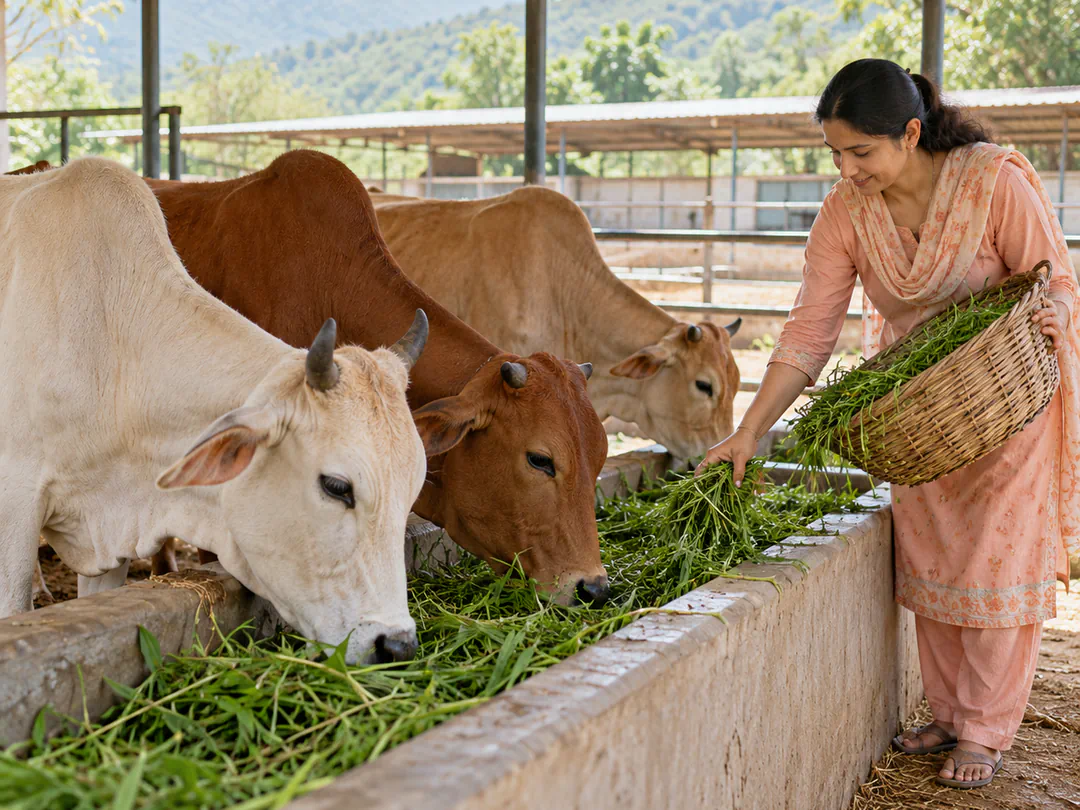
गौसेवा · हरा चारा अर्पण
How PavitraOne offers Gau Seva · Green Fodder in your name
Feeding gaumata is a cherished seva. Fresh green fodder, with gud and chokar in larger plans, is fed to cows at a gaushala in the Vaishno Devi area, Katra, with a sankalp in your family's name. Choose Ekadashi, Gopashtami, a birthday or any day that matters to you.
- 1
Choose plan and day
Pick the number of cows and a date, add the occasion and sankalp name, and pay securely.
- 2
Sankalp in your name
On your seva day, the sankalp is taken in your family's name.
- 3
Gaumata is fed
Fresh green fodder, with gud or chokar in larger plans, is fed to the cows.
- 4
Video on WhatsApp
Your video and completion update follow, normally within 48 hours.
Questions devotees ask
Frequently asked questions
Why is gau seva considered so auspicious?
The cow is honoured as Gau Mata and a form of Kamadhenu. A popular belief holds that all the gods dwell in her, so feeding and caring for a cow is seen as serving them all.
What is the best day for gau seva?
Any day is good. Ekadashi, Gopashtami, Amavasya and family occasions such as birthdays are especially popular.
What is offered in gau seva?
Most commonly fresh green fodder (hara chara), with gud (jaggery) and chokar (bran). PavitraOne's Gau Seva offers green fodder for 5 to 51 cows, with gud and chokar in the larger plans.
Can I do gau seva if there is no gaushala near me?
Yes. With PavitraOne the sankalp is taken in your family's name and the cows are fed at a gaushala in the Vaishno Devi area, Katra. You receive a video of the seva on WhatsApp.
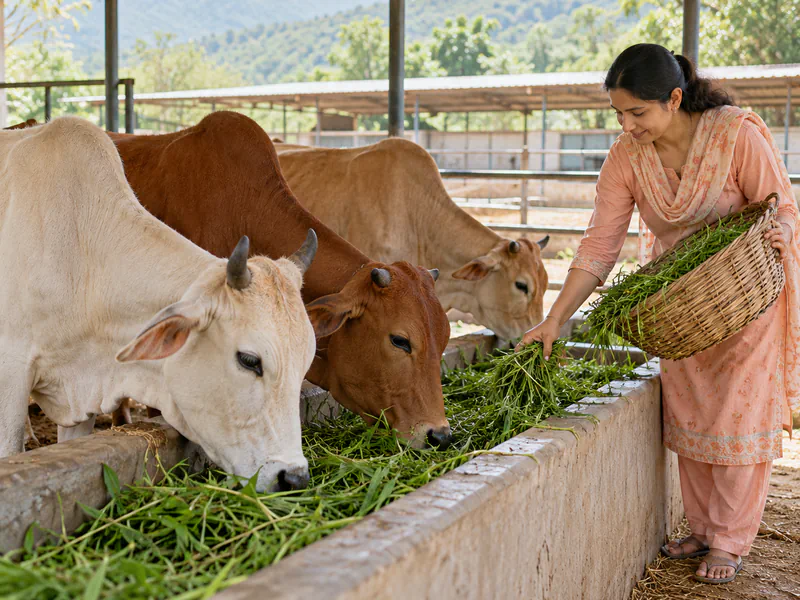
Offer Gau Seva in your family's name
Green fodder for 5 to 51 cows at a gaushala in Katra · sankalp in your name · video on WhatsApp
These stories are based on traditional texts and popular belief; their tellings can differ from region to region.