What is a sankalp, and why is the gotra asked?
संकल्प क्या है, और गोत्र क्यों पूछा जाता है?
What happens when a pandit takes a sankalp, what its old words mean, what a gotra is, and what to do if you don't know yours.
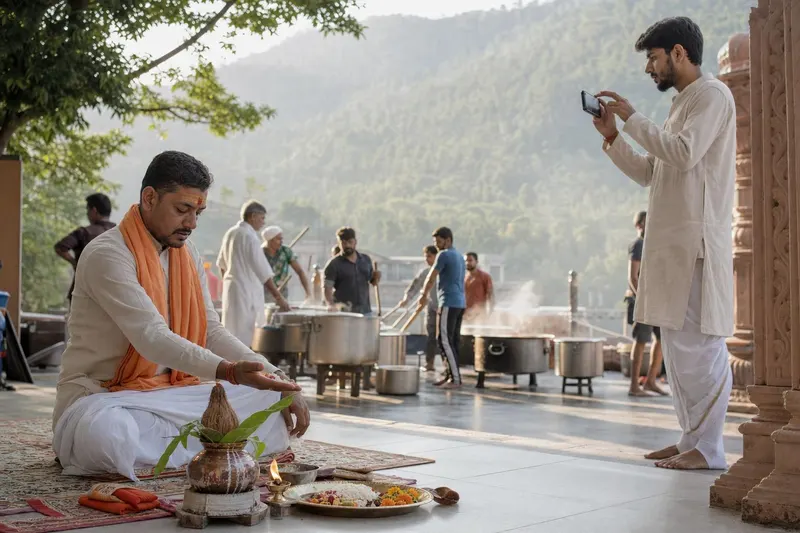
 Representational image
Every puja, vrat and seva begins with a sankalp (संकल्प), a solemn statement of intention. Holding water, a few grains of rice (akshat, अक्षत) and a flower in the right hand, the devotee, or the pandit on the devotee's behalf, says who is making the offering, where and when, and why. The water is then released to the earth, and the resolve is complete.
Why a sankalp matters
Tradition holds that an act of worship is complete only when it is joined to a clear intention. The sankalp names the person and the purpose, so that the punya of the puja reaches the one in whose name it is done. It also turns a routine act into a conscious vow, which is why it is said slowly and with attention.
What the old words mean
A full sankalp places the moment within all of time and space. It begins by remembering Lord Vishnu, names the present day of Brahma, the Shveta Varaha kalpa, the Vaivasvata manvantara and the Kali Yuga, and then the place: Jambudvipa, Bharatkhanda, Bharatvarsha, and the town or tirtha. It goes on to the year, the month, the paksha and the tithi, and ends with the person: their gotra, their name, and the wish or occasion.
ॐ विष्णुर्विष्णुर्विष्णुः। श्रीमद्भगवतो महापुरुषस्य विष्णोराज्ञया प्रवर्तमानस्य, अद्य ब्रह्मणोऽह्नि द्वितीयपरार्धे, श्रीश्वेतवाराहकल्पे, वैवस्वतमन्वन्तरे, अष्टाविंशतितमे कलियुगे, कलिप्रथमचरणे, जम्बूद्वीपे, भरतखण्डे, भारतवर्षे…
Om Vishnu, Vishnu, Vishnu. In the order set in motion by the will of Lord Vishnu, on this day of Brahma in the second half of his life, in the Shveta Varaha kalpa and the Vaivasvata manvantara, in the Kali Yuga of the twenty-eighth cycle of ages, in its first quarter, in Jambudvipa, Bharatkhanda, Bharatvarsha…
— Opening words of a traditional sankalp
What is a gotra?
A gotra (गोत्र) is a family's lineage, traced from father to son back to one of the ancient rishis: Kashyap, Bharadwaj, Vashishtha, Gautam, Atri, Vishvamitra, Jamadagni and others. Saying the gotra in a sankalp offers the puja with the blessings of one's whole line, from the rishi to the present day. Traditionally it also guided marriages, which were not arranged within the same gotra.
If you don't know your gotra
- Ask the elders of your family, or look in old wedding cards and family papers; many families' records are also kept by the pandas of Haridwar and other tirthas.
- In many families a married woman uses her husband's gotra in the sankalp; follow your family's custom.
- If no one knows, tradition allows the sankalp to be taken with Kashyap gotra, since Rishi Kashyap is regarded as the father of all beings.
How we take your sankalp
When you book a PavitraOne seva, you give the sankalp name (a person, a couple or a family), your gotra if you know it, and for most sevas the occasion. After the opening prayers, which are said once for everyone, our pandit ji reads each family's sankalp aloud by name, exactly as you wrote it, and states your offering: the meals, the cows, the diyas or the Kanjaks. If you leave the gotra blank, he takes the sankalp with Kashyap gotra, as tradition allows. Your video shows your sankalp being taken.
Based on traditional texts and popular belief; tellings differ from region to region. A puja or seva is a prayer made with faith and cannot promise a result.