Narak Chaturdashi 2026: Chhoti Diwali and the dawn bath
नरक चतुर्दशी · छोटी दीपावली 2026
This year the dawn bath falls on Sunday, 8 November, the morning of Lakshmi Puja. Shri Krishna's victory over Narakasura, the abhyang snan, and the lamps of Chhoti Diwali.
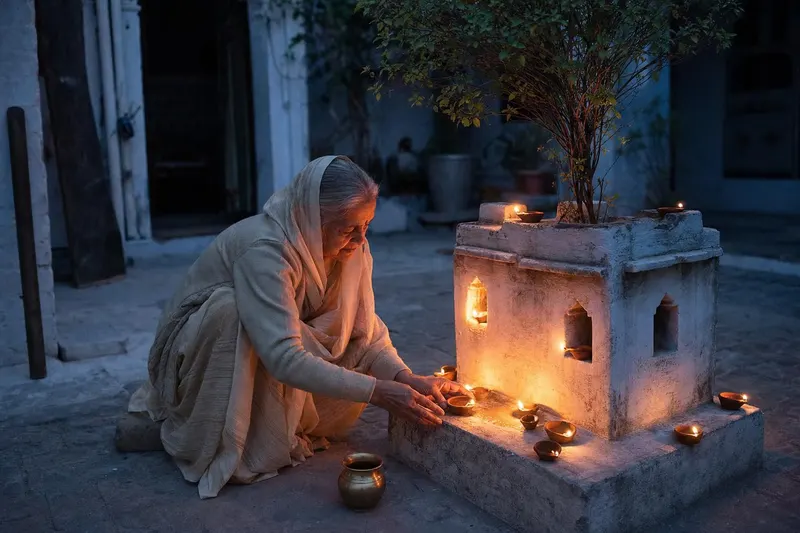
 Representational image
Narak Chaturdashi (नरक चतुर्दशी), also called Roop Chaudas (रूप चौदस) or Chhoti Diwali, is the Chaturdashi of the waning moon in Kartik, just before the Amavasya of Diwali. It celebrates Shri Krishna's victory over the demon Narakasura, and it is marked by an early bath with oil and ubtan, the abhyang snan (अभ्यंग स्नान), and by lamps in the evening.
When is it in 2026?
This year the dates need a closer look. In New Delhi the Chaturdashi tithi begins at about 10:48 AM on Saturday, 7 November and ends at about 11:28 AM on Sunday, 8 November, when the Amavasya of Diwali begins.
The abhyang snan is taken before sunrise while Chaturdashi is running, so panchangs, Drik Panchang among them, place Narak Chaturdashi on Sunday, 8 November, the same day as Lakshmi Puja. On the evening of Saturday, 7 November, Chaturdashi is already in effect: Kali Chaudas and Hanuman Puja are observed then in Gujarat and some other regions, and many calendars mark that day as Chhoti Diwali. Follow your family's custom for the evening lamps; the dawn bath is on the 8th.
Why it is celebrated
The Bhagavata Purana tells how Narakasura, made arrogant by his power, conquered the heavens, took the earrings of Aditi, mother of the gods, and held more than sixteen thousand princesses captive in his city of Pragjyotishpura. Shri Krishna, with Satyabhama beside him on Garuda, fought and killed him, freed the captives and restored what had been taken. A popular belief adds that Narakasura, at his end, asked that the day be remembered with lights.
कृष्णाय वासुदेवाय हरये परमात्मने। प्रणतक्लेशनाशाय गोविन्दाय नमो नमः॥
Salutations again and again to Krishna, son of Vasudeva, to Hari, the Supreme Self, to Govinda, who ends the suffering of those who bow to him.
— Shrimad Bhagavatam 10.73.16
How the day is kept
- Rise early and, before sunrise, massage the body with sesame oil, then bathe after applying ubtan of gram flour and turmeric. This abhyang snan is believed to wash away the year's impurities.
- In Maharashtra and Goa a small bitter fruit is crushed underfoot before the bath, a sign of Narakasura's defeat; some families also circle apamarg (chirchita) twigs around the body.
- Offer water to Yamraj (Yama tarpan) and pray to Shri Krishna.
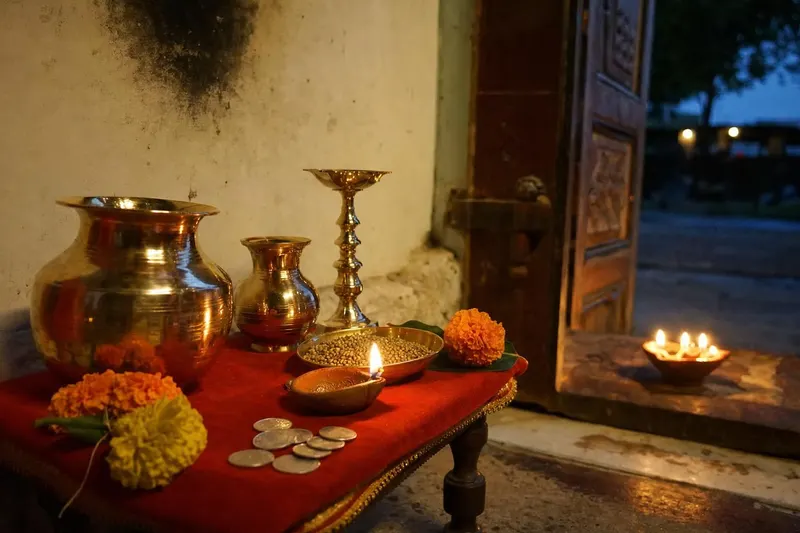
- In the evening light diyas at the door, on the threshold and around the home; in many North Indian homes a diya is also set facing south for Yamraj.
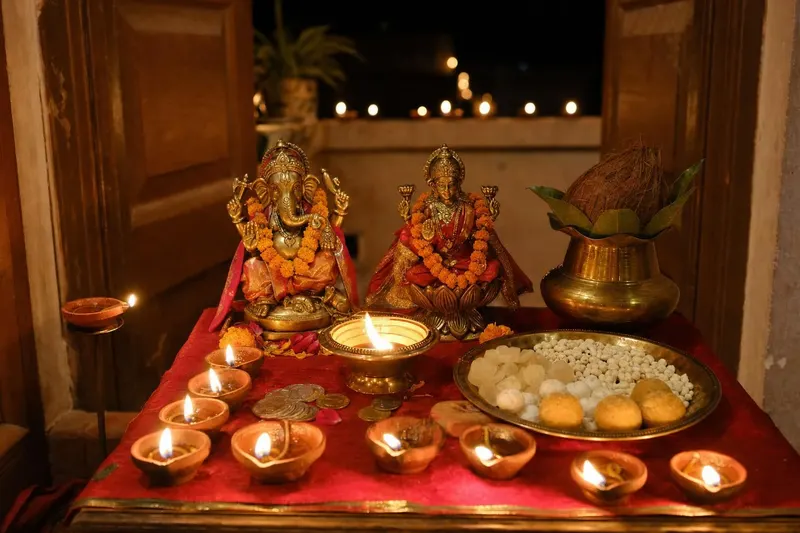
- Clean and decorate the home for Lakshmi Puja.
What to offer
- Sesame oil and ubtan for the bath
- Diyas with mustard or sesame oil for the evening
- Flowers, tulsi and sweets for Shri Krishna
- Water with black sesame for Yama tarpan, where it is the custom
Dos and don'ts
- Bathe before sunrise; tradition holds that the abhyang snan is done while it is still dark.
- Use a mild, natural ubtan and keep oil away from the eyes, especially for children.
- Be careful with lamps and firecrackers near clothes, curtains and children.
- This year, plan the dawn bath for the morning of 8 November, before the evening's Lakshmi Puja.
Based on traditional texts and popular belief; tellings differ from region to region. A puja or seva is a prayer made with faith and cannot promise a result.