Dev Uthani Ekadashi 2026: Lord Vishnu awakens
देवउठनी एकादशी 2026
Friday, 20 November. The end of Chaturmas, the awakening of Shri Hari, Tulsi Vivah, and the return of the season of weddings.
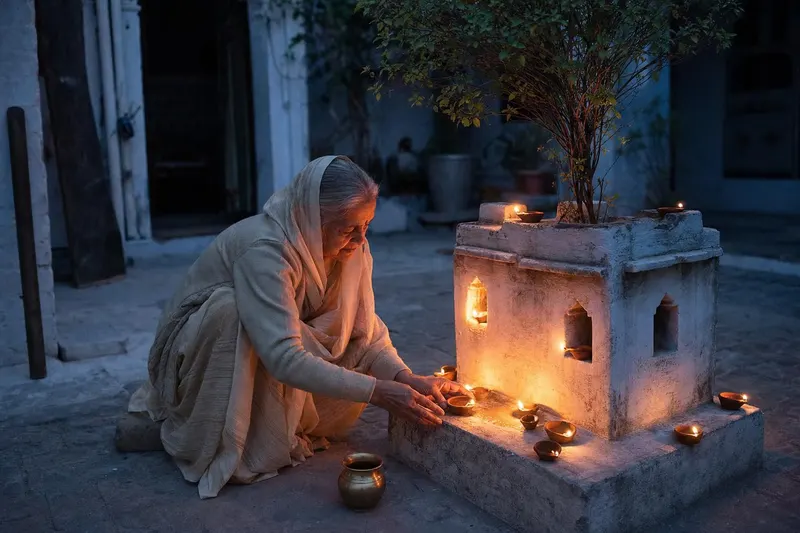
 Representational image
Dev Uthani Ekadashi (देवउठनी एकादशी), also called Prabodhini or Devotthan Ekadashi, falls on the Ekadashi of the bright half of Kartik. Tradition holds that Lord Vishnu, who went into yoga nidra on Devshayani Ekadashi four months earlier, awakens on this day. Chaturmas ends, and weddings and other auspicious ceremonies begin again.
When is it in 2026?
Dev Uthani Ekadashi falls on Friday, 20 November 2026. This year the Ekadashi tithi begins just after sunrise, at about 7:16 AM on 20 November in New Delhi, and ends at about 6:32 AM on 21 November, just before the next sunrise. Panchangs therefore list the household (Smarta) fast on 20 November, while many Vaishnav traditions keep it on Saturday, 21 November. Many families perform Tulsi Vivah on Dwadashi, 21 November, and some on the evening of the Ekadashi.
Why it is celebrated
The four months of Chaturmas, when Shri Hari is believed to rest on Sheshnaag in the ocean of milk, are a time of vows, restraint and devotion, and weddings are not held. On Prabodhini Ekadashi devotees wake the Lord with conches, bells and songs, and the season of celebrations returns. Many say that the first wedding of the season is Tulsi's, to Shaligram.
The story of Tulsi
A popular katha from the Puranas tells of Vrinda, the devoted wife of the asura Jalandhar, whose virtue made her husband invincible. To end Jalandhar's tyranny, Lord Vishnu took Jalandhar's form and broke her vow. Vrinda cursed him to become a stone, the Shaligram, and gave up her life. Moved by her devotion, Vishnu blessed her: she would be worshipped as the sacred tulsi, dearer to him than any flower, and wedded to him in his Shaligram form every year.
उत्तिष्ठ गोविन्द त्यज निद्रां जगत्पते। त्वयि सुप्ते जगन्नाथ जगत्सुप्तं भवेदिदम्॥
Rise, O Govinda, Lord of the world, and leave your sleep; while you sleep, O Jagannath, the whole world sleeps.
— Traditional prayer to wake Lord Vishnu on Dev Uthani Ekadashi
How it is kept
- Keep the Ekadashi fast as your health allows, without grains.
- In the courtyard, draw the Lord's feet in geru or rice paste, and make a small canopy of sugarcane.
- In the evening, worship Lord Vishnu with seasonal produce and wake him with conch, bells and the prayer above; in many homes women sing “उठो देव, बैठो देव” as they wake him.
- For Tulsi Vivah, dress the tulsi as a bride with a red chunri and bangles, set the Shaligram or a Vishnu murti beside her, and perform the wedding rites with mangal geet (मंगल गीत) and pheras.
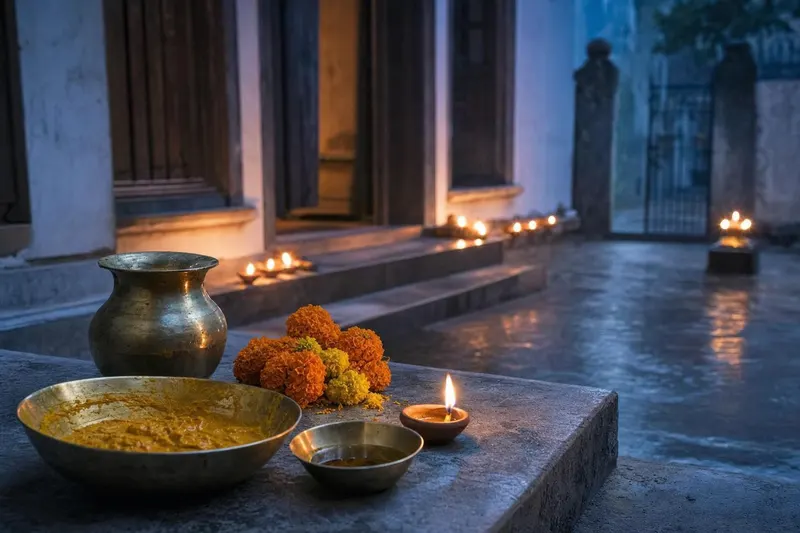
- Light diyas around the home, the tulsi and the temple.
What to offer
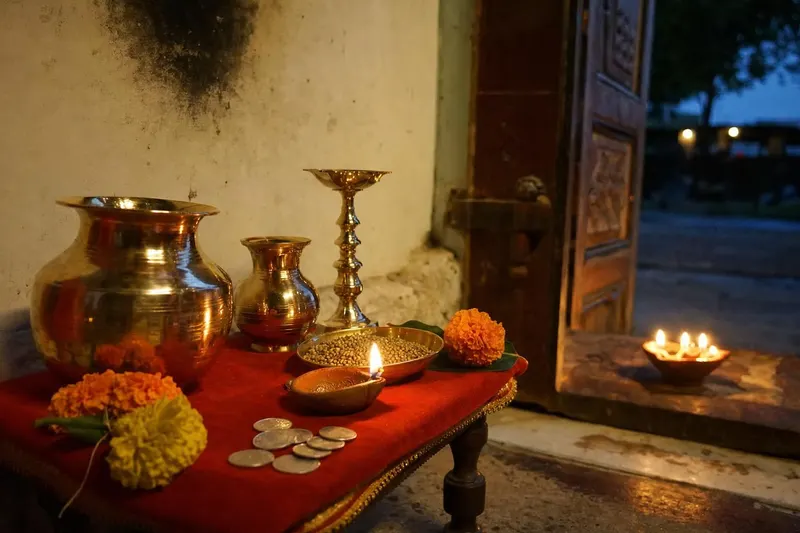
- Sugarcane, singhara (water chestnut), sweet potato, amla and ber
- Tulsi leaves picked the day before, yellow flowers and panchamrit
- Gud, sweets and fruit as naivedya
- For Tulsi Maa: a red chunri, bangles, bindi and sindoor
Dos and don'ts
- Do not pluck tulsi leaves on Ekadashi or on the day of Tulsi Vivah; gather them a day earlier.
- Avoid rice and grains during the fast, and keep the day sattvik.
- Many families wait for Dev Uthani before fixing a wedding or a griha pravesh; ask your family pandit about the exact muhurat.
Based on traditional texts and popular belief; tellings differ from region to region. A puja or seva is a prayer made with faith and cannot promise a result.